
The imported aluminum scrap market plays a vital role in Vietnam’s aluminum production and recycling industry. Consequently, selecting supply sources affects not only the mechanical quality of finished products but also directly impacts operational costs and business economic efficiency. In the Asian market, Japan stands out for its relatively stable sorting quality, while Malaysia holds advantages in supply scale and diversity of scrap grades. Analyzing metallurgical properties, estimated recovery rates, regulatory hurdles, and cost-effectiveness of these two sources provides the basis for plants to optimize procurement and production workflows.
1. Characteristics and recovery rates of Japanese Aluminium Scrap
Japan is a nation with a highly developed mechanical engineering, automotive, and electronics manufacturing sector. Thanks to source-sorting procedures and domestic management standards, aluminum scrap from Japan typically achieves high cleanliness and low non-metallic impurities. In international trade, Japanese scrap is frequently traded under local commercial names (such as sash, wheel, and engine blocks) rather than relying entirely on the US ISRI specifications system.
Common grades of Japanese aluminum scrap include 6xxx series extrusions (door frames, sashes), cast aluminum from automobiles, and baled used beverage cans (UBC). Regarding cast alloys, engine blocks and gearbox casings commonly utilize ADC12 alloy (Al-Si-Cu system), whereas automotive wheels are typically cast from A356 alloy (Al-Si-Mg system). Pre-processing technologies at Japanese collection centers employ shredding, magnetic separation, Eddy Current separation, and XRF/LIBS sensor sorting. This helps minimize non-metallic impurities (plastics, rubber) and foreign metals (free iron, copper, zinc), keeping the raw material surface relatively clean with minimal machining grease.
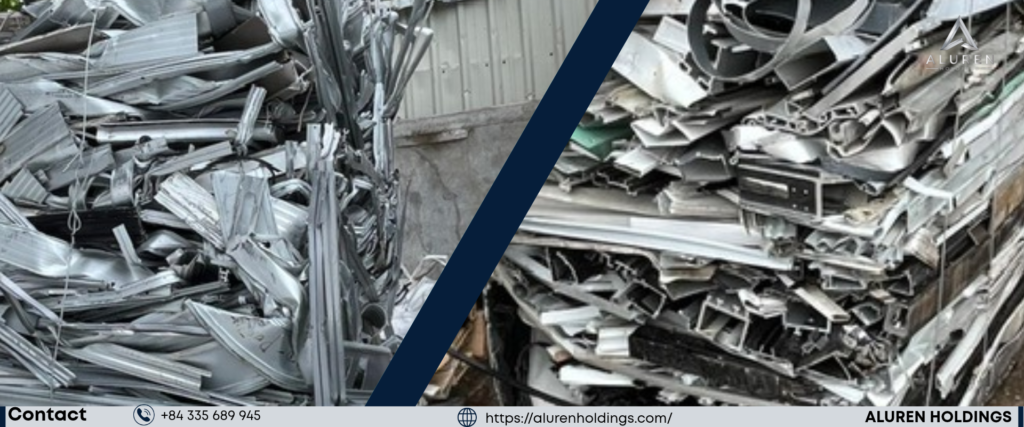
Japanese aluminum scrap is distinguished by adherence to JIS H2119 and extremely strict internal factory standards that tightly regulate impurity limits. Consequently, this supply source features high alloy consistency and superior metal recovery rates. Exports to Vietnam primarily consist of baled aluminum sash scrap (alloy 6063) from demolition sites, along with 63B grades containing very low impurity levels. Although exempt from export duties, the primary barrier in the Japanese market is the price spread between domestic and international markets. When domestic prices surge, price inversion occurs, significantly contracting export volumes. Combined with tighter controls on resource exports, Japanese scrap offers absolute quality stability but limited volume, with pricing closely aligned with LME. This source is particularly suited for plants requiring highly consistent feedstock, such as 6063 billet manufacturing.
Common grades of Japanese aluminum scrap include 6xxx series extrusions (door frames, sashes), cast aluminum from automobiles, and baled used beverage cans (UBC). Regarding cast alloys, engine blocks and gearbox casings commonly utilize ADC12 alloy (Al-Si-Cu system), whereas automotive wheels are typically cast from A356 alloy (Al-Si-Mg system). Pre-processing technologies at Japanese collection centers employ shredding, magnetic separation, Eddy Current separation, and XRF/LIBS sensor sorting. This helps minimize non-metallic impurities (plastics, rubber) and foreign metals (free iron, copper, zinc), keeping the raw material surface relatively clean with minimal machining grease.
2. Characteristics and Recovery Rates of Malaysian Aluminum Scrap
Malaysia is a major hub for processing and re-exporting scrap metal in Southeast Asia. The country imports large quantities of mixed raw scrap such as Zorba (mixed non-ferrous scrap not deeply shredded or separated) from the US, Europe, and Australia to process into shredded aluminum Twitch, mixed sheet aluminum (Taint/Tabor), and cast aluminum (Tense) via dense media / sink-float separation and automated sorting. Chemical composition within a single shipment may exhibit variations in Silicon (Si), Iron (Fe), Copper (Cu), and Zinc (Zn) content.
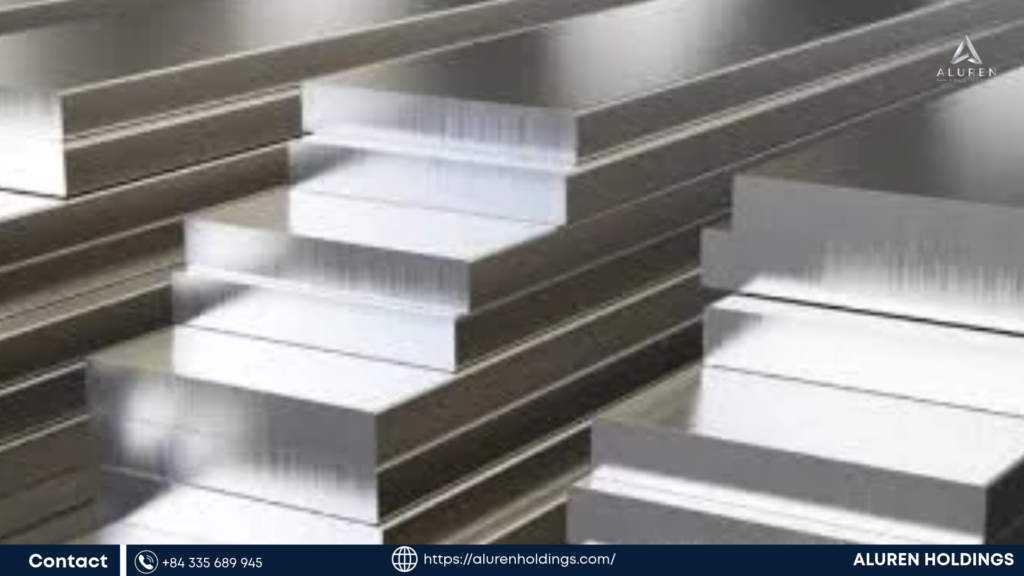
In contrast to Japan, Malaysia lacks a separate domestic classification standard, relying entirely on SIRIM import regulations and ISRI guidelines. Since 2022, all scrap shipments entering the country must obtain a Certificate of Approval (COA) with stringent purity requirements. Consequently, scrap originating from Malaysia is essentially imported material that has undergone processing and blending from multiple sources, leading to lower traceability and alloy consistency. Malaysia exports diverse grades such as Tense, Talon, and UBC, and serves as a secondary aluminum melting hub (ADC12). Policy-wise, the imposition of a 10% export duty on aluminum scrap inflates raw scrap prices and restricts volumes, encouraging secondary ingot exports instead. Overall, Malaysia offers flexible volume and grade options, but quality exhibits higher variance. It serves as a strategic secondary source for Vietnam when Japanese prices rise, yet requires enterprises to maintain robust risk management and input quality inspection capabilities.
3. Geographic Location Advantages and Transit Times to the Vietnamese Market
In addition to technical characteristics, factors such as costs, shipping logistics, and Vietnamese import regulations play a decisive role in procurement efficiency. Regarding estimated transit times for reference, maritime routes from Malaysian ports (e.g., Port Klang, Penang) to Vietnam take approximately 1 to 6 days, whereas shipments from Japanese ports (Tokyo, Yokohama, Osaka) range from 7 to 12 days. Both nations benefit from preferential tariff rates under free trade agreements (ATIGA, VJEPA, RCEP) when accompanied by valid certificates of origin.
4. Summary
Selecting aluminum scrap sources between Japan and Malaysia depends on technology capabilities, furnace systems, and target output specifications of each plant. Japanese material is ideal for manufacturers requiring strict purity and low Fe, Cu, and Si impurity thresholds. Meanwhile, Malaysian supply offers cost advantages for facilities capable of handling mixed feedstock and equipped with comprehensive environmental compliance systems. Depending on production strategies, businesses can balance the blending ratio between both sources to achieve optimal economic performance.